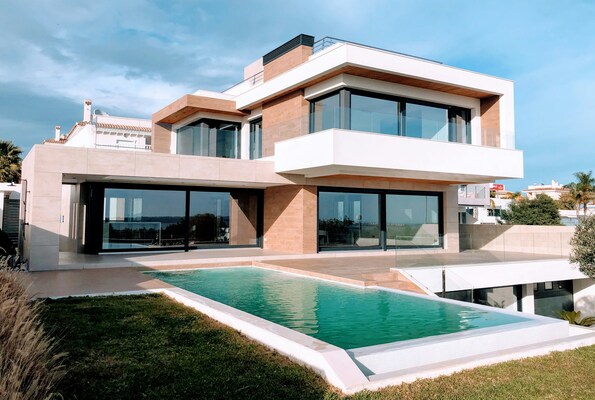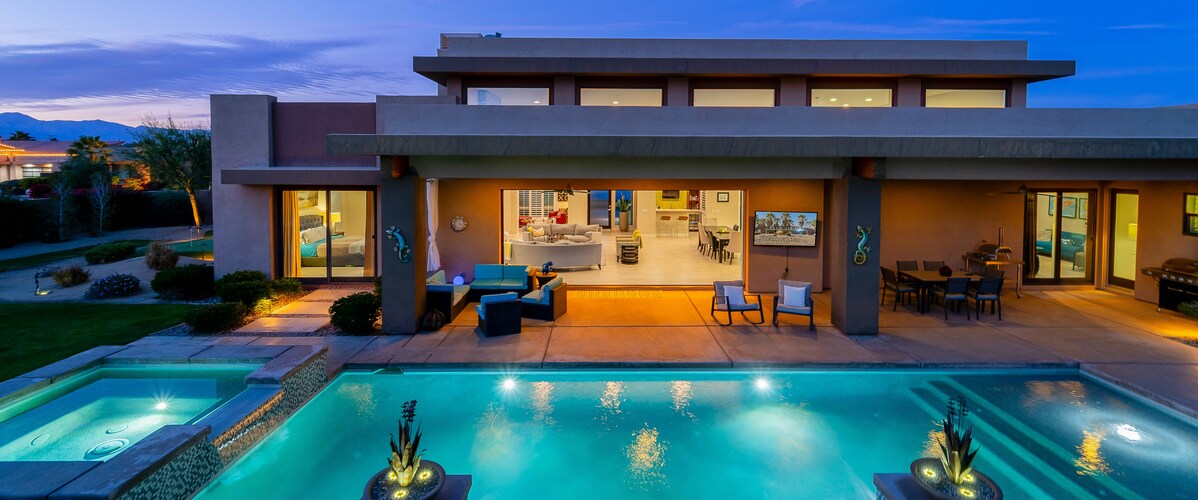
South Africa's luxury real estate market occupies a unique position in the global property landscape. For the price of a modest apartment in London, Monaco, or New York, you can acquire a spectacular multi-bedroom mansion in Sandhurst, a clifftop villa in Clifton, or a world-class golf estate home in Eye of Africa — complete with pool, staff quarters, home cinema, and top-tier security. This extraordinary value proposition has made South African luxury property increasingly attractive to both domestic high-net-worth individuals and international investors.
This guide covers South Africa's luxury real estate market in full — the most prestigious addresses, price benchmarks, what defines true luxury in the South African context, and the investment case for buying at the top end of the market.
What Defines Luxury Real Estate in South Africa?
In South Africa, the definition of luxury property has evolved significantly over the past decade. Price alone no longer defines it. The modern luxury buyer is sophisticated, globally travelled, and demanding — they expect a combination of location prestige, architectural excellence, lifestyle infrastructure, and comprehensive security that justifies a premium price.
True luxury property in South Africa is characterised by:
- Location prestige: An address in Clifton, Sandhurst, Hyde Park, Bishopscourt, or a premier golf estate carries inherent value beyond the physical structure.
- Architectural distinction: Custom-designed homes with signature architecture, premium finishes, and bespoke features — not off-plan templated developments.
- Self-sufficiency: Solar power, battery storage, boreholes, and water tanks — South Africa's infrastructure challenges mean genuine luxury requires off-grid capability.
- Security: High-specification perimeter security, biometric access, 24-hour guards, CCTV, and armed response are baseline expectations at the top end.
- Lifestyle amenities: Private pools, home gyms, wine cellars, home cinemas, staff quarters, and multi-vehicle garaging are standard inclusions rather than aspirational extras.
The most expensive house ever sold in South Africa transacted at approximately R285 million in Clifton, Cape Town. At the same price in London, you would acquire a standard terraced house in Chelsea. The value differential between South African luxury property and comparable global markets remains extraordinary — and is a primary driver of international buyer interest.
South Africa's Most Prestigious Property Addresses
Luxury real estate in South Africa is concentrated in a small number of neighbourhoods that have maintained their prestige and price growth through multiple market cycles. These are the addresses that serious luxury buyers target.
Advertisement
The Most Expensive Houses in South Africa
The top end of South Africa's residential market regularly produces transactions that rival international luxury markets in absolute terms — while offering significantly more value in physical space, land size, and lifestyle infrastructure.
South Africa's most significant residential transactions on record include properties in Clifton's first and second beaches, Fresnaye, Sandhurst, and the Franschhoek wine valley. The majority of transactions above R50 million occur in Cape Town, reflecting the city's status as South Africa's most globally recognised luxury market and the destination of choice for domestic semigrants from Gauteng.
In Johannesburg, Sandhurst recorded sales of R90 million and R75 million in 2024 — its strongest freehold performance in a decade. These transactions reflect increasing recognition that Sandhurst's per-square-metre pricing remains significantly below comparable Cape Town addresses, despite offering equal or superior stand sizes and architectural quality.
Luxury Homes for Sale in Johannesburg
Johannesburg's luxury residential market is centred on a cluster of northern suburbs that have maintained their prestige through decades of urban development. For buyers seeking luxury property in Johannesburg, these are the key addresses:
- Sandhurst: The most expensive suburb in Johannesburg by average sale price. Large stands, mature trees, diplomatic presence, and strict architectural character guidelines protect values.
- Hyde Park: Adjacent to Sandhurst, Hyde Park offers slightly more accessible entry points while maintaining prestige. Strong demand from executives, diplomats, and high-net-worth families.
- Westcliff: Hilltop suburb with exceptional Johannesburg skyline views. Some of the city's finest period homes and architecturally significant contemporary residences.
- Bryanston: The family luxury destination — large freehold stands, top private schools nearby, and a well-established community of professionals and executives.
- Eye of Africa Estate: For buyers who prioritise lifestyle, security, and golf — Eye of Africa offers a comparable luxury experience at a meaningful discount to Sandhurst freehold pricing.
The Investment Case for South African Luxury Property
South African luxury property offers a compelling investment case that extends beyond emotional appeal. Several structural factors support the long-term investment thesis:
Rand weakness creates dollar-denominated value: For international buyers purchasing in dollars, euros, or pounds, South African luxury property represents exceptional value. A USD10 million budget purchases something extraordinary in Cape Town or Johannesburg that would be impossible in comparable global cities.
Semigration continues to drive Cape Town demand: The sustained movement of high-income households from Gauteng to the Western Cape has underpinned Cape Town luxury property prices through multiple economic cycles. This structural demand shows no sign of abating.
Scarcity at the top end: Trophy properties in Clifton, Sandhurst, Bishopscourt, and premier golf estates are finite in supply. Unlike middle-market suburbs where developers can add stock, the top-end supply is largely constrained by existing development — supporting values through market cycles.
Rental yields: South Africa's luxury rental market — servicing diplomatic tenants, multinational executive relocations, and high-net-worth lifestyle renters — supports gross yields of 4–7% on luxury property in prime suburbs, competitive with global luxury rental markets.
What South African Luxury Buyers Expect in 2026
The South African luxury buyer of 2026 has a sophisticated, non-negotiable checklist that goes well beyond architectural aesthetics:
- Complete energy independence: Solar panels, battery storage (typically 20–40kWh), and generator backup. Load-shedding is simply not acceptable at the luxury price point.
- Water security: Boreholes, rainwater harvesting, and significant water storage capacity. Municipal supply unreliability has made water self-sufficiency a luxury necessity.
- Smart home integration: Unified control of lighting, climate, security, entertainment, and access via smartphone is a standard expectation, not a premium feature.
- Private wellness infrastructure: Heated pools, home gyms, wellness suites, and sauna rooms are baseline requirements at the top end.
- Entertainment spaces: Wine cellars, home cinemas, outdoor entertainment areas with covered braai facilities, and professional-grade kitchens.
- Multi-vehicle garaging: Four or more garages is common at the R10M+ price point.
- South Africa offers extraordinary luxury value relative to any comparable global market — a dollar budget goes significantly further here than in London, Sydney, or New York.
- Cape Town leads on price and demand — Clifton and Bishopscourt are South Africa's most expensive addresses, driven by semigration and international interest.
- Johannesburg offers better value at equivalent quality — Sandhurst and Hyde Park deliver comparable luxury to Cape Town's top suburbs at meaningfully lower prices per square metre.
- Self-sufficiency is non-negotiable — solar, battery, borehole, and water storage are baseline requirements for any property positioning itself as luxury in 2026.
- Scarcity supports values at the top end — trophy property supply in premier suburbs and estates is finite, providing structural price support through market cycles.