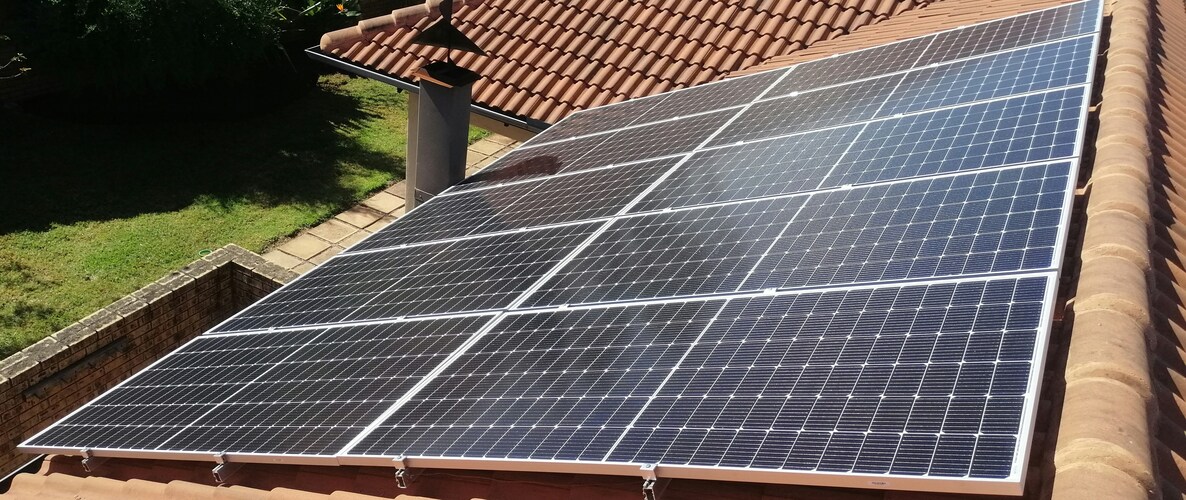
South Africa's rooftop solar boom has been nothing short of remarkable. Driven by relentless load shedding, homeowners have poured billions into solar systems, believing they were securing energy independence and long-term savings.
But a growing warning from property experts and civil rights organisations suggests that for many, this "green investment" could become a costly trap.
Paul Stevens, CEO of Just Property, describes the situation as a "solar debt trap" where non-compliant installations, evolving municipal penalties, and strict new insurance requirements create financial burdens that could outweigh the savings on monthly electricity bills.
The ticking clock: 30 September 2026
Homeowners with unregistered grid-tied solar systems face a rapidly approaching deadline. By 30 September 2026, all systems must be registered as Small-Scale Embedded Generation (SSEG) installations.
Those who miss the deadline could face severe consequences. Municipalities are empowered to impose administrative charges of around R6,000, plus capacity based penalties that can push fines as high as R30,000. In severe or repeat cases, penalties can reach R50,000, with forced removal of the system adding further costs.
The City of Cape Town already charges a R6,425.90 service fee for unauthorised systems and treats non-compliance as a criminal offence. Eskom has paused punitive fines but warns that disconnection notices will be issued for unregistered systems.
Stevens describes the current fee waiver as a "ticking clock", urging homeowners to act before the deadline. "After that, the 'solar fine' will be the least of their worries compared to the backdated fees and risk of disconnection," he warns.
Insurance voidance: The hidden danger
Perhaps the most overlooked risk is the impact on home insurance. Many homeowners incorrectly assume that their standard building policy automatically covers their solar installation.
Insurers are increasingly demanding proof of professional installation before settling claims related to fire, weather damage, or theft. Without a valid Certificate of Compliance (CoC) or an 'as-built' report like the PV GreenCard, insurers may void the entire building policy not just the solar related claim.
Stevens warns that the days of DIY solar are effectively over from an insurance perspective. "We've seen cases where minor electrical fires, even when they're not related to the solar system, become nightmares because the home's overall electrical grid was deemed non-compliant due to unregistered inverters."
Complex living and forced removals
Homeowners in sectional title complexes and estates face additional challenges. Many mistakenly believe they have the right to install panels on their roof, but roofs in these developments are generally classified as common property.
Legal processes set out in the Sectional Titles Schemes Management Act require a Special Resolution (75% approval) or for the roof space to be designated as an Exclusive Use Area. Without one or the other, bodies corporate can force the removal of unapproved panels at the owner's cost, potentially exceeding R100,000.
The municipal revenue grab
Civil rights organisation AfriForum has raised serious concerns about financially distressed municipalities using solar users as a "piggy bank". In Thaba Chweu Local Municipality, a monthly charge of R582.64 has been introduced for properties with solar installations even where they are not connected to the municipal electricity network.
Emfuleni Local Municipality has proposed a R2,400 once-off fee and R463 monthly charge for solar users. AfriForum has launched petitions and investigations, questioning whether these charges are lawful, transparent, and properly authorised.
Stevens notes that municipalities are moving toward two-part tariff systems with fixed "network demand" or "availability" charges. Even if a home uses zero grid electricity, the owner may still face a hefty monthly bill.
Protecting your investment and property value
On a positive note, solar can add 3% to 4% to a property's value, but Stevens stresses that this premium increasingly depends on full SSEG registration. "In today's property market, savvy purchasers are asking for the SSEG registration papers before they even sign an offer to purchase," he says.
Homeowners are urged to keep all compliance documents building plans, CoC, PV GreenCard, and SSEG registration in a single "Green File". Presenting this to prospective buyers can justify a premium and prevent delays during the transfer process.
Act now
The message from property experts is clear: solar is not a "set-and-forget" solution. Compliance is now the only way to ensure that your green investment actually pays off when you sell, and to avoid fines, insurance voidance, and forced removals.
For a complete breakdown of what your CoC must cover and how to obtain one, read our comprehensive Compliance Certificates guide.
